



POS – what does it really mean, and why does this term come up in every conversation about modern retail and services? In this article, we explain clearly and thoroughly what a POS system is, how it works, and what benefits it offers. This guide is especially useful for business owners or those planning to implement a sales system in 2025.
POS – what does it mean and what does it consist of?
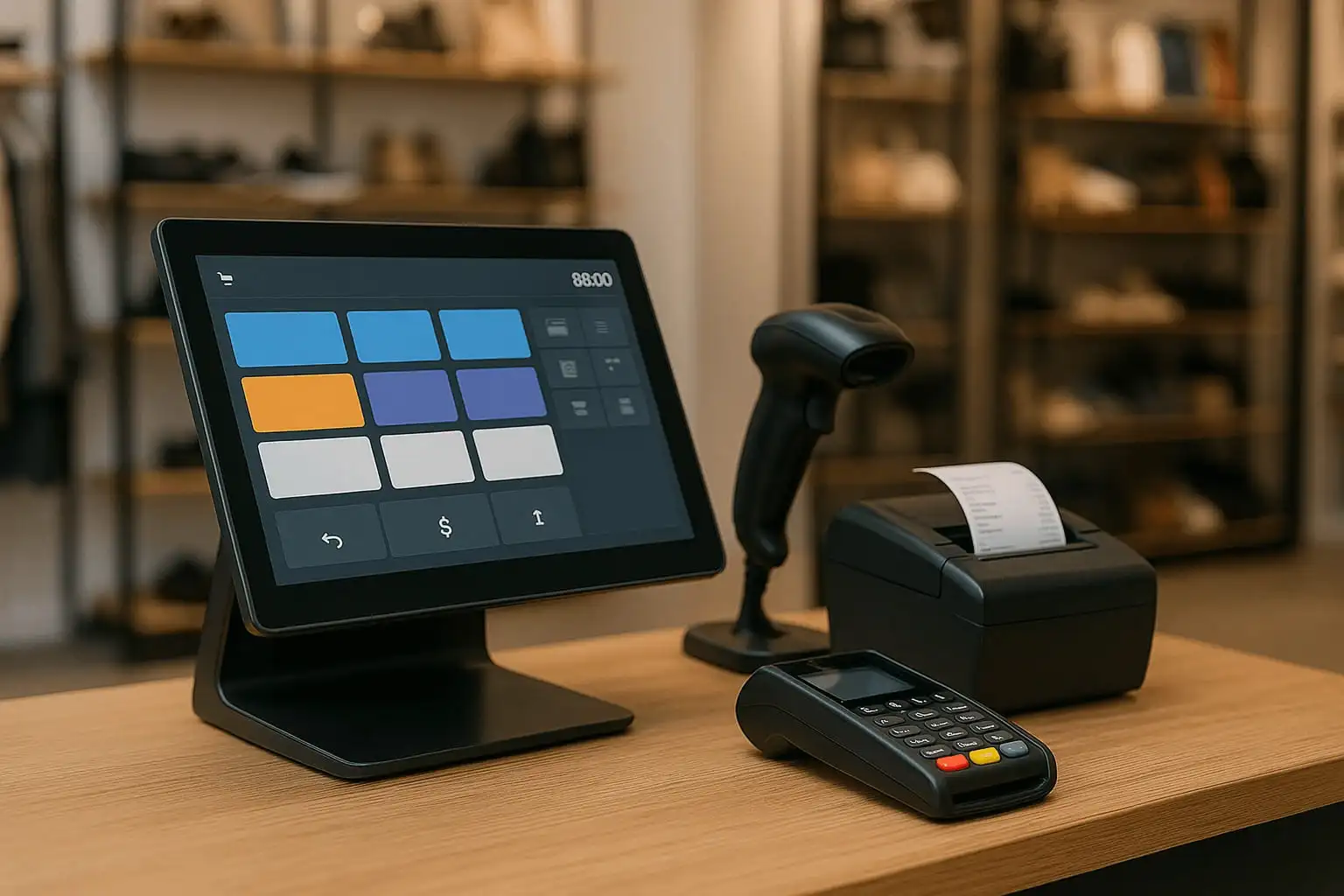
The abbreviation POS stands for Point of Sale, which refers to the place where a retail transaction occurs. In practice, it’s a combination of hardware and software that allows for customer service – from product input and receipt generation to payment processing and reporting.
A typical POS system may include:
- a main device (e.g. tablet, computer, or smart terminal);
- a barcode scanner;
- a receipt or fiscal printer;
- a payment terminal;
- POS software that integrates all these components into one interface.
Modern POS systems can operate either locally or in the cloud – providing real-time access to sales data from anywhere.
How does a POS system work?
When a customer makes a purchase, the employee enters products into the POS system using a scanner or manually. The system then:
- automatically applies prices and discounts;
- calculates VAT or applicable taxes based on configured settings;
- generates a fiscal receipt;
- sends the amount to the payment terminal;
- stores transaction data in the system’s database.
Seamless and Secure: The Future of Card-to-Card Money Transfers
Thanks to real-time integration of all these elements, the business gains both speed of service and full control over sales, inventory, and financial reporting. As a result, it’s easier to manage operations, analyze trends, and make data-driven decisions.
Benefits of using a POS system
Implementing a POS system provides numerous advantages – regardless of the size of the business. The most notable benefits include:
- Automated sales and reporting – no more manual cash-counting at the end of the day.
- Integrated cashless payments – fast handling of cards and digital wallets.
- Inventory control – automatic stock updates after each transaction.
- Reporting and analytics – data accessible directly through the admin panel.
- Integration with loyalty programs and CRM systems – enabling better customer relationships.
For multi-location businesses, modern POS systems also allow for centralized management of all locations from a single dashboard. This greatly improves team coordination and accelerates response to market changes.
POS in 2025 – what should you look for?
POS technology is advancing rapidly. More and more businesses are adopting cloud-based solutions that enable mobility and remote data access. When choosing a POS system, it’s worth considering whether it:
- complies with local tax regulations (e.g. digital receipts, structured reports);
- provides continuous software updates;
- integrates with payment terminals and e-commerce platforms;
- guarantees data protection in line with GDPR;
- offers scalable technical support as the business grows.
A well-chosen POS system is a tool that evolves with your business – instead of holding it back.
Fintech and modern POS – more than just a register
Today’s POS system is no longer just a receipt-printing machine – it’s the command center of a modern business. Thanks to the dynamic growth of the fintech sector, entrepreneurs now have access to solutions that go far beyond traditional point-of-sale functions. Integrating a POS system with advanced financial services allows for fast, secure, and omnichannel payment processing – not only by card or smartphone, but across a wide range of methods.
Pay by Bank: everything you need to know about this payment method
For example, collaboration with companies like Fenige enables merchants to implement advanced transaction systems for both online and in-person payments. These solutions also support multi-currency international settlements, which is especially valuable for businesses engaged in cross-border sales, e-commerce platforms, and service providers catering to international customers. Regardless of the sales channel, all payments can be managed from a single, user-friendly interface.
Moreover, modern POS systems supported by fintech solutions enable real-time sales reporting, improving operational transparency and facilitating better business decisions. Data on turnover, payment methods, and peak hours is available immediately – without the need for exporting reports or manually calculating figures from multiple sources.
Another key advantage is access to advanced financial analytics. Today’s POS systems can track not only revenue but also metrics such as average cart value, conversion rates, abandoned transactions, and the performance of individual payment channels. This enables business owners to optimize costs and adapt swiftly to changing customer behavior and market conditions.
Thanks to these capabilities, the POS system becomes the operational hub of your business – connecting sales, payments, and management into one cohesive environment. This is the future of retail and services—and it’s already happening.